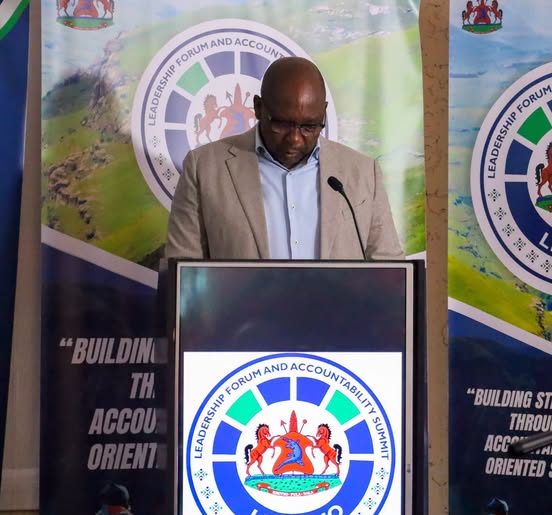
As the National Leadership and Accountability Summit entered the second day in Teyateyaneng, The Right Hounourable the Prime Minister Ntsokoane Samuel Matekane reiterated that governments and citizens must be prepared to engage more frequently and more openly with the public.
Prime Minister made emphasis during a summit which had attracted leaders from different aspects of development.
Mr. Matekane added that development cannot be imposed from above, but it must be shaped and owned by the people themselves.
“There can be no meaningful development without active participation of the people. Citizens are not merely beneficiaries of development; they are partners in development hence the upcoming National Dialogue and Accountability Summit”, he added.
He pointed out that through this process, they seek to strengthen transparency, deepen public participation, and reinforce the principle that leadership carries a responsibility to account to the people.
“It is important to emphasize that accountability is not a responsibility of the Executive alone. Accountability applies to every institution and every individual entrusted with public responsibilities”, he added.
He continued to say that such forums are therefore not intended only for Government Ministries only. They are intended to foster accountability across the entire public sector.
Prime Minister also indicated that they are all custodians of public trust, citing that they are all funded through public resources generated by taxpayers, therefore, they are all answerable to the people.
He urged all participants to work together on building the Lesotho that is prosperous, accountable, inclusive, and resilient, the Lesotho that delivers on the aspirations of its people and secures a better future for generations to come.
“Leadership is not merely about authority; it is about responsibility. It is about setting an example for others to follow. As leaders, we must establish and uphold the highest standards of integrity, professionalism, ethical conduct, and accountability”, he explained.
He pointed out that Basotho nation expect more than promises, but they expect honesty, transparency, fairness, and results.
Furthermore, he said the tone they set as leaders will determine the culture that develops within our institutions
Also reflecting on their experiences, Rwanda Prime Minister Dr. Nsengiyumva Justin said the meeting was founded on shared conviction: that meaningful transformation in our countries, and on our continent, requires honest reflection on governance,
leadership, and development.
Dr. Nsengiyumva highlighted that when Rwanda emerged from the Genocide against the Tutsi in 1994, the country faced immense challenges. Institutions had collapsed, the economy was devastated, and communities carried deep trauma. Yet even in those difficult
circumstances, one thing remained within our control: the choices we made about the future.
He stressed that under the leadership of His Excellency President Paul Kagame, Rwanda made a defining decision. “We would not allow our circumstances to define the limits of our ambition. We would think beyond immediate constraints and focus relentlessly on
improving the lives of our citizens”, he said.
Reflecting on the lessons learnt, Rwanda Prime Minister noted that in the early 2000s, Rwanda adopted Vision 2020, an ambitious plan to transform a largely subsistence agriculture-based economy into a knowledge-based, middle-income country, while not every target was achieved.
“Vision 2020 succeeded in creating direction, discipline, and national coherence. It aligned institutions around shared priorities and encouraged leaders to think beyond short-term challenges”, he highlighted.
He indicated that today, Rwanda continues that journey through Vision 2050. The lesson is simple: countries make greater progress when they are guided by a clear and ambitious vision of where they want to go.
Dr. Nsengiyumva added that following the Genocide against the Tutsi, Rwanda faced another challenge beyond reconstruction.
“The world knew Rwanda only through the lenses of tragedy. The question before us was how to build a different future and a different narrative”, he said.
He stated that Rwanda is a small, landlocked country with limited natural resources and rather than focusing on what they lacked, they asked themselves a different question: what strengths we possess, and how we build upon them.
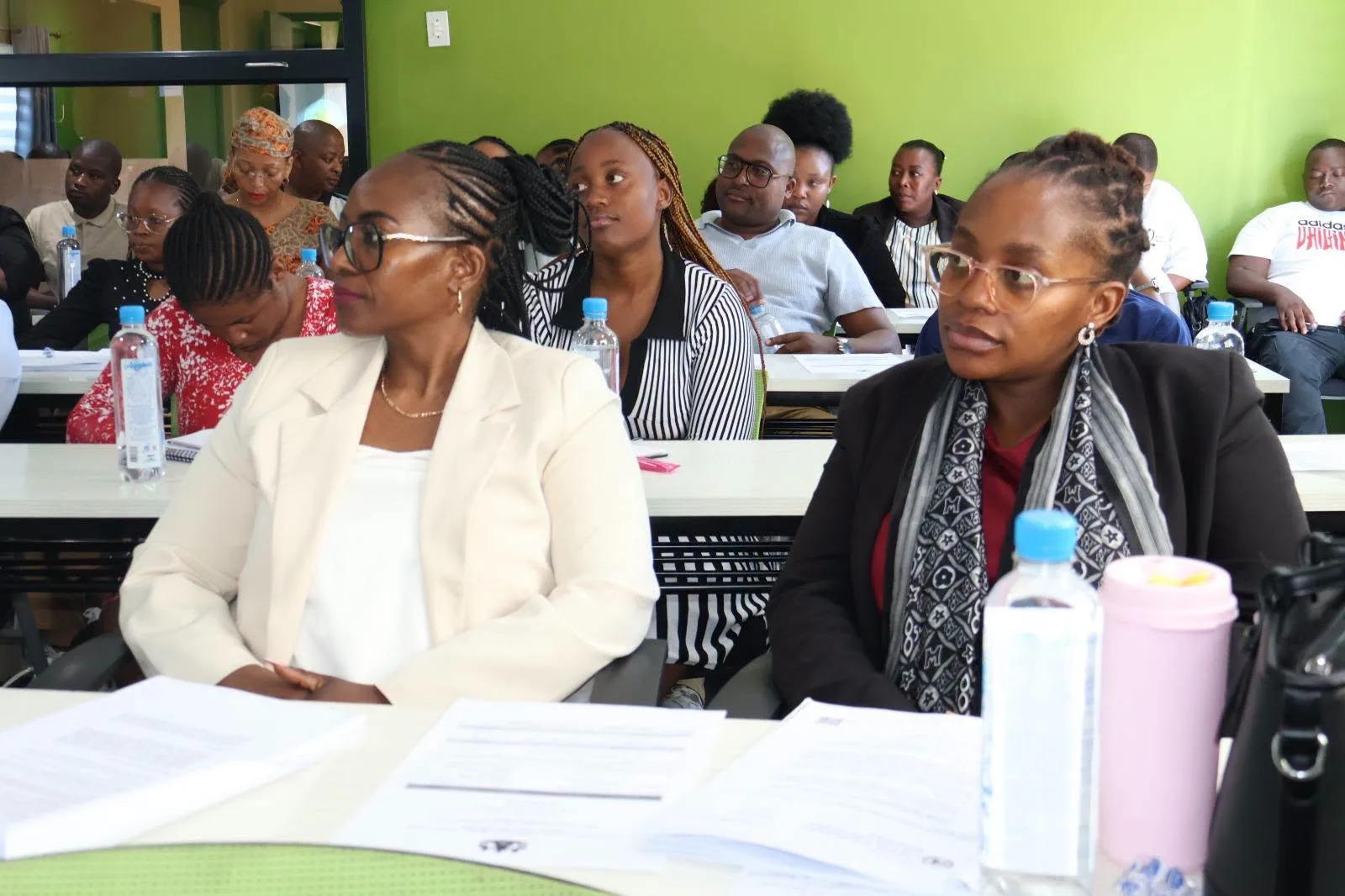
Meanwhile, the session attracted various sectors of leadership ranging from the national security sector, District Administrators and other sectors.
Among the issues to be touched throughout the day include, discussions on strategic context of the national priorities relatively to the National Strategic Development Plan (NSDP) as extended, fiscal year implications.
Source: Lesotho News Agency [LENA]